
What is arthritis?
Arthritis is a common source of hand pain in patients older than 40 years of age. Osteoarthritis is the most common type of arthritis, and is also known as degenerative joint disease. This is caused from normal “wear and tear” occurring gradually over time. The small joints in the fingers and the large joint at the base of the thumb are the most commonly affected joints in the hand. Rheumatoid arthritis, gout, psoriasis, and lupus are other different types of conditions which can affect the joints, and these are much different from osteoarthritis.
What are the signs of osteoarthritis?
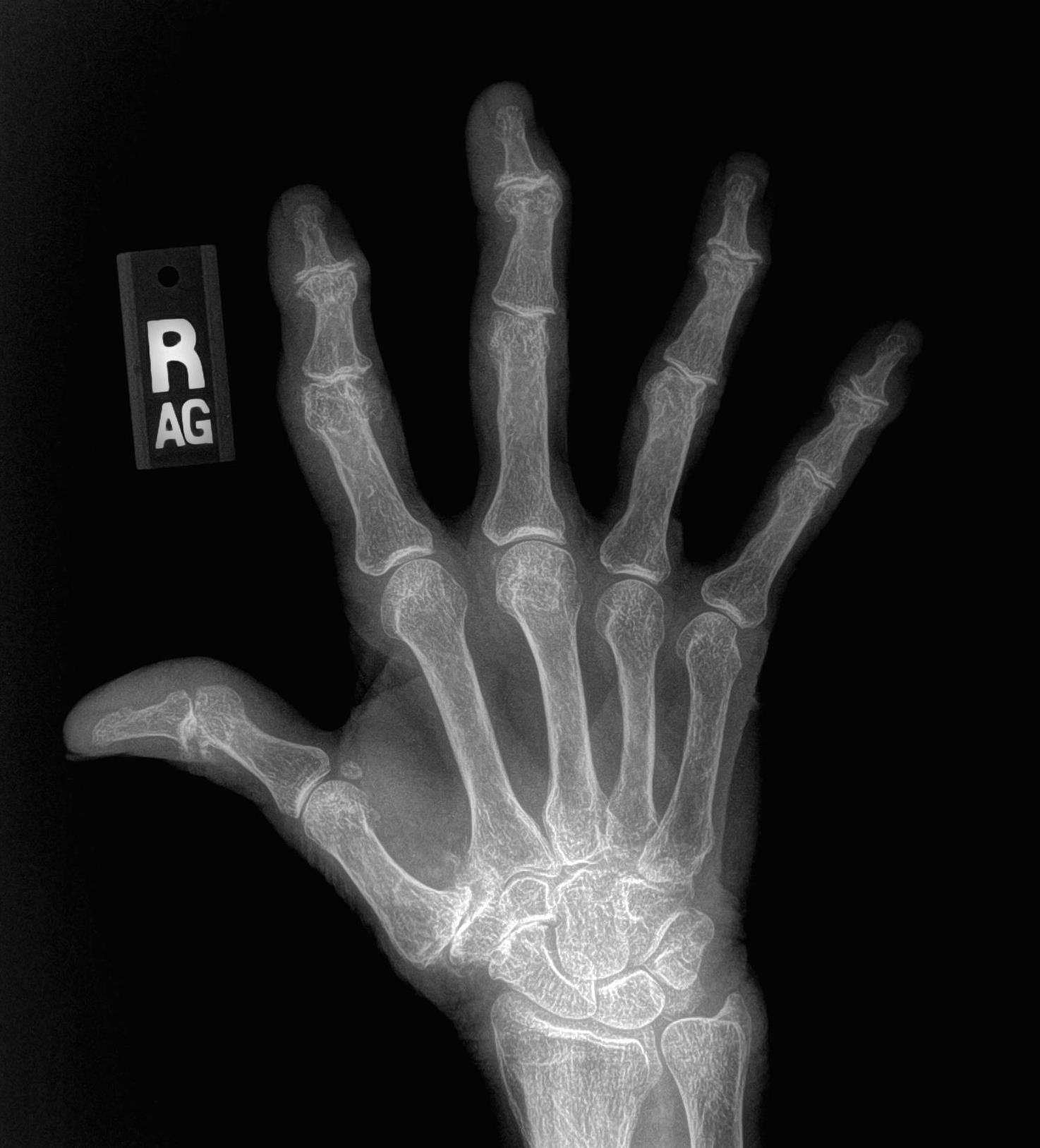 Patients often describe a gradual onset of “dull ache” pain in the joints and morning stiffness in the fingers. In some patients, the stiffness in the fingers gets worse and the patient notices decreased range of motion in the hand. Some of the knuckles can develop prominent bumps, which are seen as bone spurs or “osteophytes” on x-rays. In more severe cases, the fingers can develop deformities and appear crooked. Not everyone with arthritis develops deformities or severe pain, however.
What causes arthritis?
There are many factors which contribute to osteoarthritis including family history, injuries, and age. The joints in our bodies are made up of cartilage, which cushions and protects the end of the bones and allows for full range of motion. Over time, this protective cartilage becomes thin and wears away. In some patients, the cartilage surface is worn out and there is “bone-on-bone” grinding at the joint, which can be painful. This “wear and tear” process can be increased after an injury.
What are the treatment options?
 Although there is no cure for arthritis, there are several treatments which can help reduce the symptoms. Simple things patients often try at home are warm water soaks in the morning, gentle range of motion exercises, and warm paraffin wax dips. There are many over-the-counter products which may help such as oral medications, dietary supplements, and ointments. Use of oral anti-inflammatory pills (Tylenol, Ibuprofen, Naproxen, etc.) can reduce pain, and should be used sparingly due to side-effects. Dietary glucosamine and chondroitin supplements can reduce pain when taken for several months.
Capsaicin ointment and anti-inflammatory creams can be purchased over-the-counter and applied to the skin over a painful joint. Additionally, doctors can prescribe various types of braces and splints to help support arthritic joints. Hand therapists can make custom splints for patients to wear. Corticosteroid injections (cortisone shots) can be used sparingly for a painful joint to reduce pain and swelling.
Is surgery needed?
Most people do not require surgery for arthritis. If patients have tried non-surgical treatment and still have troublesome pain, surgery might be recommended. Depending on the patient and the affected area, either joint replacement or joint fusion surgeries are options. Thumb CMC arthroplasty surgery is a very effective surgical treatment for thumb CMC joint arthritis if conservative treatment is not successful.
Updated 10/21/2017