
Thumb arthritis is a common cause of thumb pain. At the base of the thumb is a special joint called the carpo-meta-carpal (CMC) joint. The thumb CMC gives our thumbs a wide range of thumb motion. The ability to touch the thumb to the small finger is called “opposition.” This function makes human hands special. The base of the thumb is exposed to a large amount of “wear and tear” stress because we use this joint every day. Opening jars, turning a key, wringing out a cloth, all use this area. Over time, this joint can wear out and become arthritic. The normal smooth cartilage wears away, leading to bone-on-bone contact at the joint. This can cause pain, weakness, and stiffness. Previous injury and family history of osteoarthritis may also add to this.
Thumb CMC joint arthritis is a common form of degenerative joint disease, also known as osteoarthritis. It is one of the most common places to get osteoarthritis in the hands. Osteoarthritis is more common the older we get, and it is part of the usual aging process.
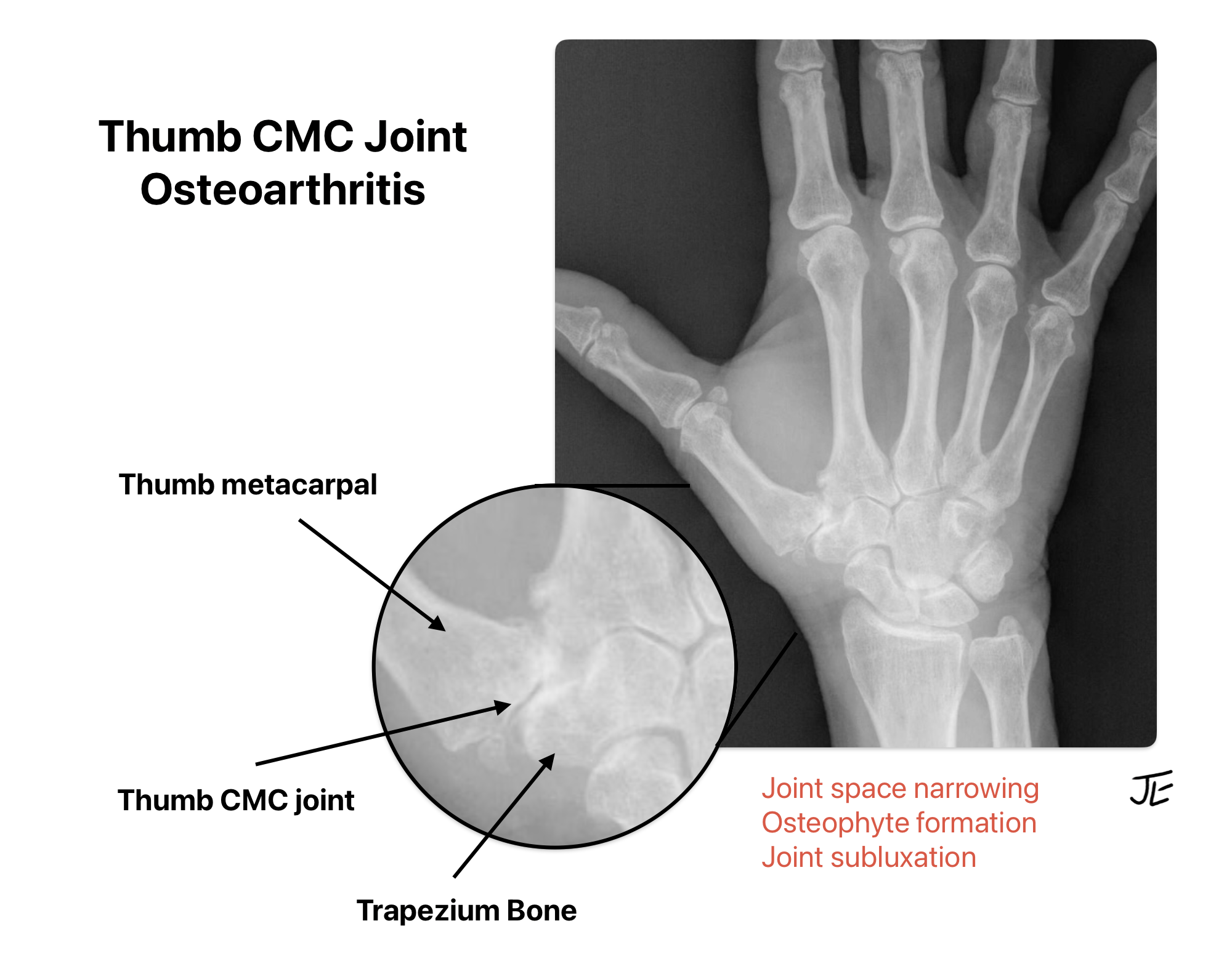
These x-rays show a patient with thumb CMC joint with osteoarthritis. You will see bone spurs on the edges of the joint (osteophytes) and decreased space between the bones. The bones are rubbing together because the cartilage has worn away.
Non-operative treatments for thumb arthritis:
- Thumb brace
- Anti-inflammatory pills (NSAIDs)
- Tylenol pills
- Glucosamine and Chondroitin Sulfate dietary supplements
- Turmeric supplements
- Topical medications and creams
- Cortisone injections
- Adjusting hand activities to reduce pain
Reducing inflammation in the joint can relieve the arthritis pain. We do not have a cure for osteoarthritis, but we can treat the pain. Many patients can avoid surgery with adjusting their hand activities, using oral or topical medications, and using a thumb brace. Most patients try a steroid shot into the joint to see if this will provide pain relief.
What surgery is recommended for thumb arthritis?
Surgery may be recommended when non-operative treatment has failed to control the symptoms. The most common type of surgery for thumb CMC arthritis is called “thumb CMC arthroplasty.” The surgery is performed as an outpatient, usually in a surgery center. General anesthesia can be avoided by using a temporary nerve block and sedation. During surgery, the arthritic bone at the base of the thumb (the trapezium bone) is removed. This procedure eliminates the grinding pain between the bones. For most patients, this surgery provides good thumb range of motion, decreased pain, and good grip strength. Most patients are very happy with the results.
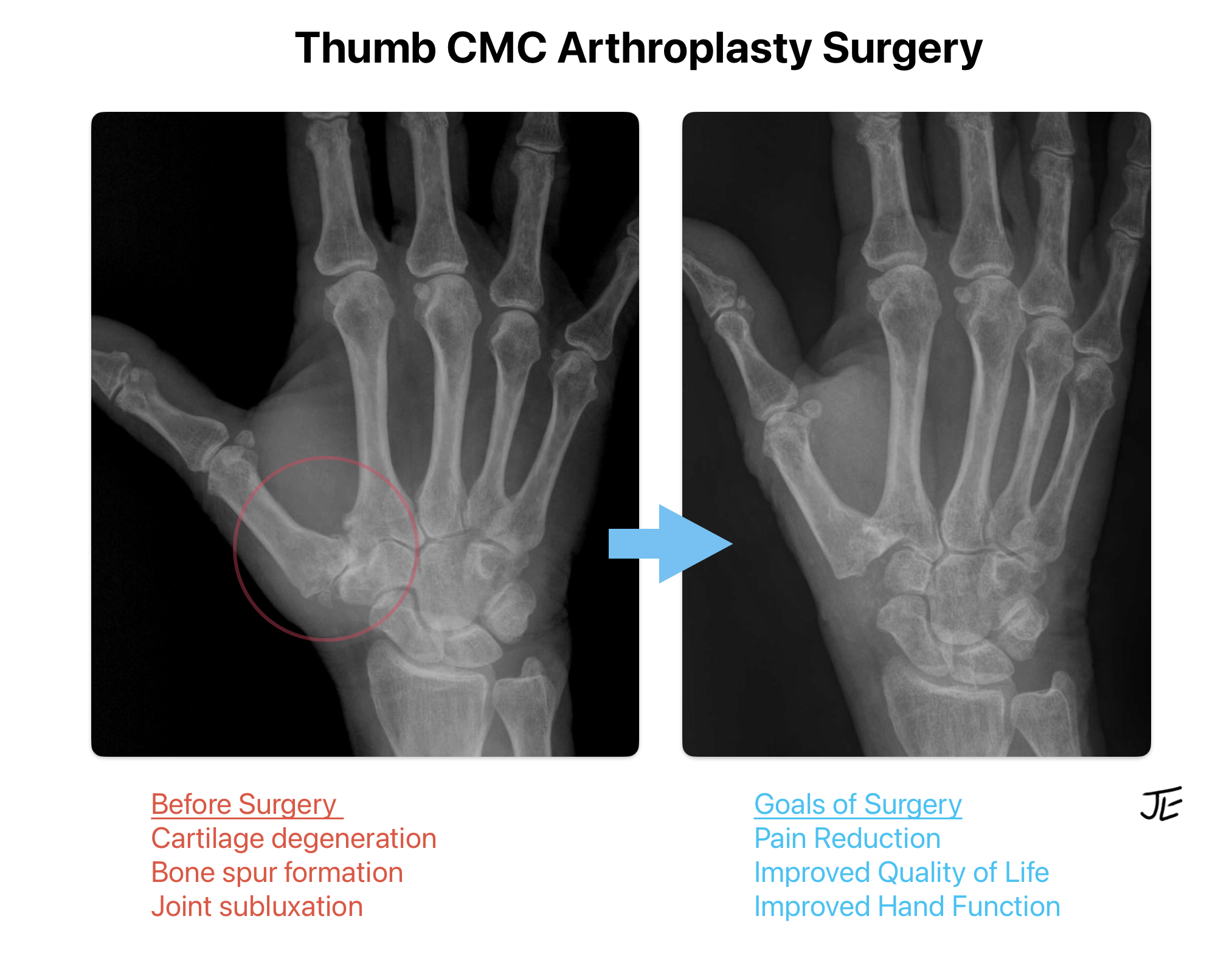
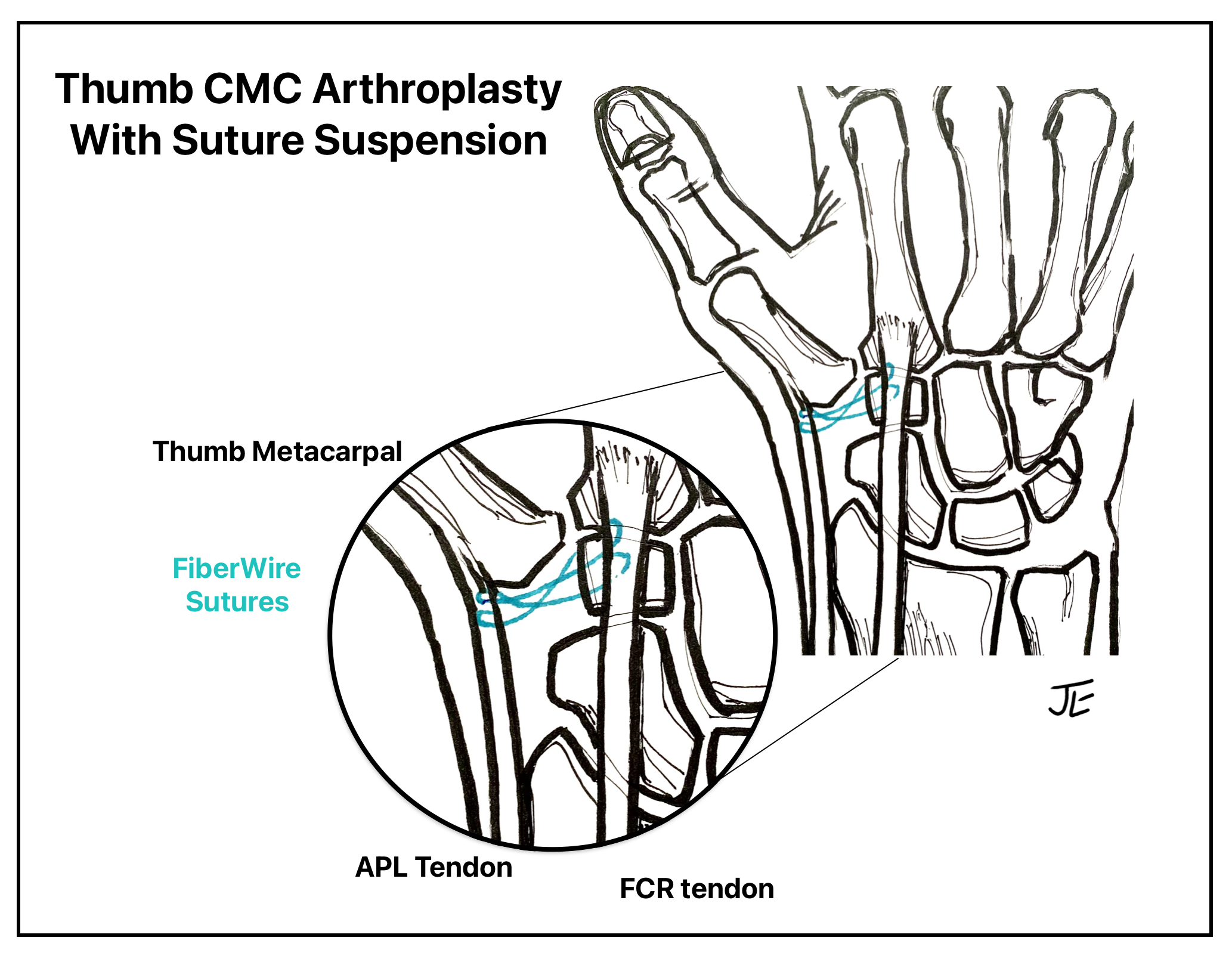
While I have performed the traditional tendon graft “LRTI” thumb CMC arthroplasty procedure for many years with good results, I have begun using the newer, less-invasive suture suspension technique. I believe that this newer technique is less painful and allows for a quicker recovery, compared to the traditional thumb CMC surgery which uses a tendon graft. The suture suspension technique also has a low risk of complications and positive long-term outcome data. Recently published studies show good-to-excellent functional results in patients up to 14 years after suture suspension surgery, with improved pinch strength and maintained pain relief. However, I advise patients that the procedure is not a “quick fix” as it takes about 3 months to return to heavy hand use and up to a year to obtain maximal thumb range of motion and pinch strength. I also recommend that patients attempt several months of nonsurgical treatment before considering surgery, since the symptoms may improve significantly without surgery.
Patients can trust the doctors and therapists at the Raleigh Hand to Shoulder Center to provide them with effective and compassionate care for their thumb CMC joint osteoarthritis.
Updated December 2025