
What is a paronychia fingernail infection?
A paronychia is a common type of finger infection surrounding the fingernail. The infection typically involves the cuticle and it can extend into the nail fold on the lateral side of the nail. The word paronychia is usually pronounced “pair-uh-NICK-ee-uh.”
What are the signs and symptoms of a paronychia fingernail infection?
Patient symptoms include localized redness, swelling, warmth, pain, and tenderness around the finger cuticle and nail fold. Occasionally an area of white discoloration can be seen under the skin which is a sign of pus accumulation. Over time the fingertip pain can become severe and interfere with sleeping.
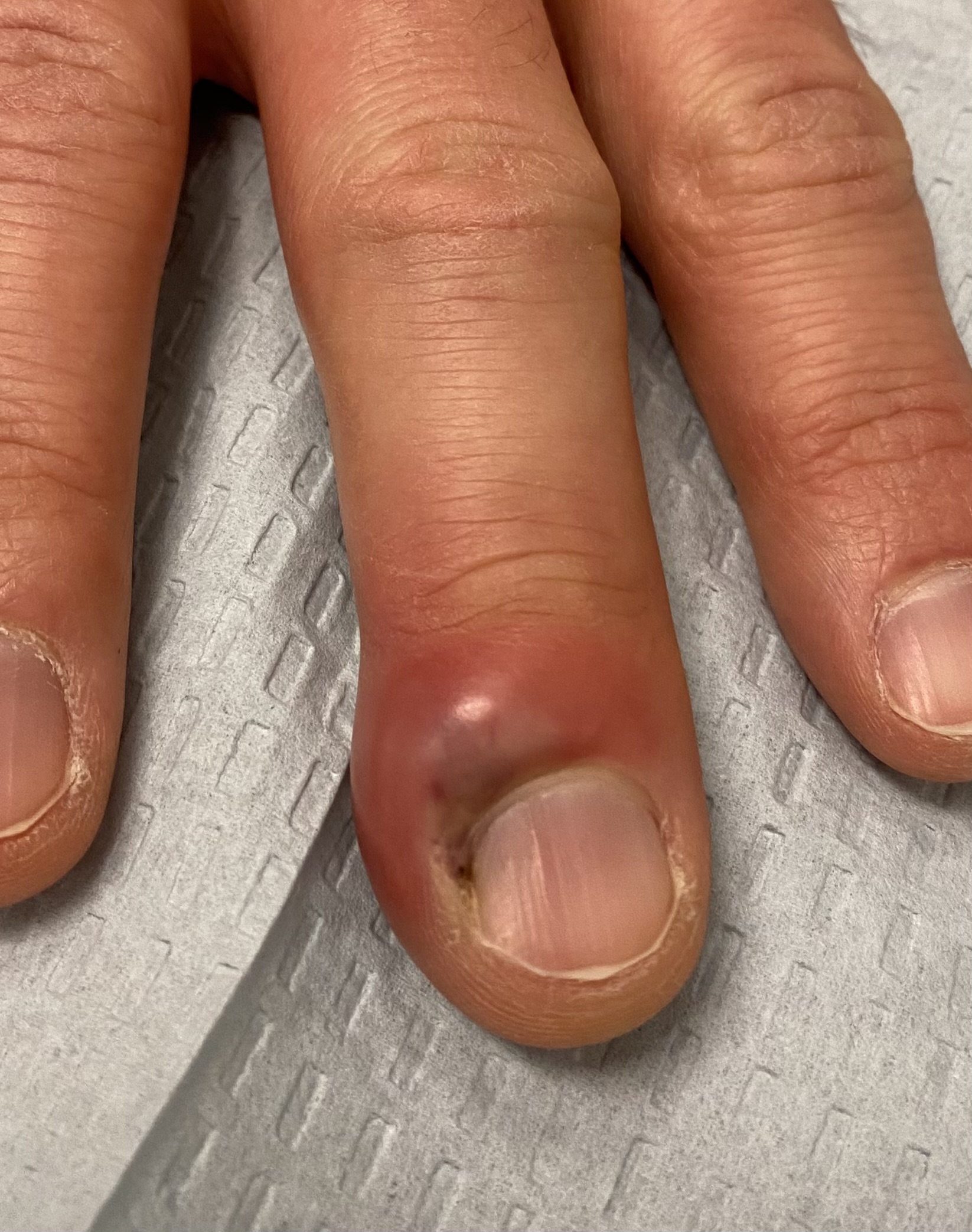
What are the risk factors for paronychia infection?
Risk factors for a paronychia fingernail infection include nail biting, pulling on a “hang nail,” trauma to the cuticle, and frequent manicures.
How is a paronychia treated?
In mild cases, a paronychia fingernail infection can be treated with warm water soaks, with or without Epsom salts. This home remedy can increase the local blood flow in the area and possibly allow for natural drainage of the infection. Oral over-the-counter medications such as ibuprofen can help with the finger pain and inflammation. If this does not relieve the symptoms, patients should seek assistance from a healthcare provider.
In more severe cases, the paronychia infection may need to be treated with a surgical procedure and possibly oral antibiotics. If there is a significant pocket of pus, or an abscess, this fluid should be drained out. Hand surgeons commonly treat patients with paronychia fingernail infections in their office using local anesthesia numbing medications. Once the pus is drained, the patient is instructed in post-procedure wound care, pain management, and antibiotic treatment. In some cases a bacterial culture of the fluid is obtained which can guide antibiotic selection.
What is the recovery from a paronychia infection?
If left untreated, these infections can cause damage to the fingertip soft tissues, cuticle, nailbed, and occasionally spread to other parts of the finger including the bone or joint. If treated promptly, however, paronychia infections have a good prognosis for recovery. The area around the fingernail can be inflamed, sore, swollen, and discolored for several weeks after a severe infection. These symptoms gradually improve as the area heals over time.
If you have a paronychia infection, seek medical attention promptly if you are not improving with conservative treatment. Consider a consultation with the doctors at the Raleigh Hand to Shoulder Center if you live in the Raleigh-Durham area. Our doctors are board certified in orthopedic surgery and are members of the American Society for Surgery of the Hand.
This information does not replace examination and treatment by a qualified healthcare professional. Please make an appointment to learn more about your specific condition.