
Dupuytrens disease is a common condition affecting the hand. This condition is characterized by abnormal scar or fibrous tissue formation in the palms and fingers. Early in the course of the disease process, firm nodules of fibrous tissue develop in the palm. In about 30-50% of patients, these nodules develop into cords which gradually bend the fingers into a flexed position. Over time, the finger joints become stiff and more difficult to straighten. The resulting bent finger is called a flexion contracture. Severe flexion contractures in the fingers can develop which significantly impair the use of the hand.
Treatment options are available for patients with Dupuytrens at various stages of the disease. Currently, there are no cures for Dupuytrens and no proven way to slow down the disease process. Corticosteroid injections (cortisone shots) are sometimes used to reduce pain or discomfort from Dupuytrens nodules in the palm. Steroid injections can shrink and soften the nodules in many patients, however, the nodules often come back in the future. Topical medications such as verapamil, Vitamin E, and steroid creams are being studied for treatment of palmar nodules. Radiation treatment is available, but it is considered controversial for Dupuytrens disease by most hand surgeons. Radiation is used more commonly in Europe compared to hand care practices in the United States.
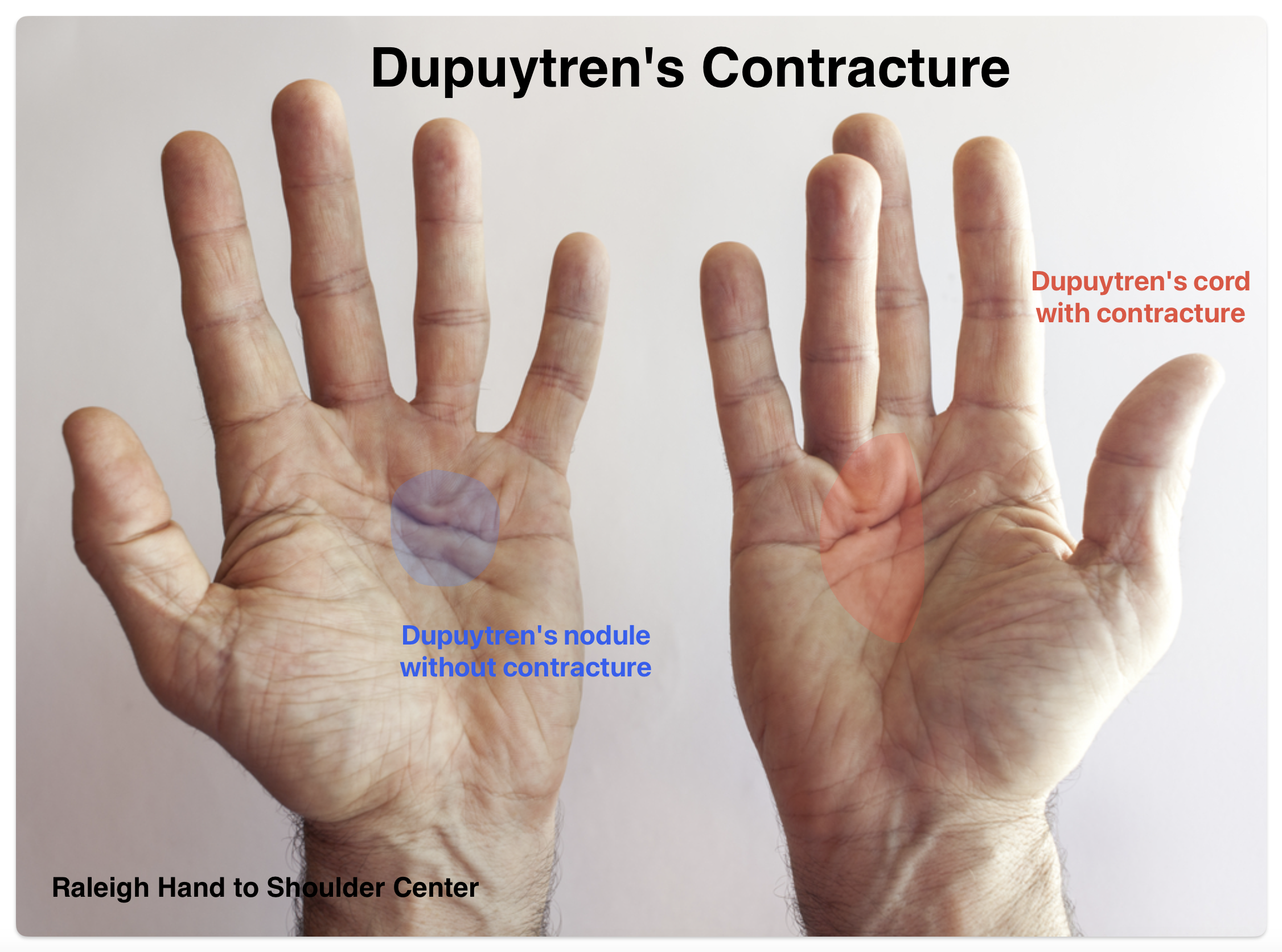
When a joint contracture has developed from a Dupuytrens cord, there are two non-surgical treatments for patients with Dupuytrens contracture: (1) needle aponeurotomy and (2) collagenase injections. Both procedures are performed in the office and are effective nonsurgical treatments. Patients who do not want surgery for Dupuytrens contracture often ask about treatment options other than surgery.
Nonsurgical Treatment for Dupuytrens Contracture
Needle aponeurotomy and collagenase injection procedures can significantly improve finger range of motion. Patients have a much quicker recovery with these nonsurgical treatments compared to surgery. The major complication risk is lower with nonsurgical treatments compared to surgery. Patient satisfaction is usually high for these procedures. However, not all patients are appropriate candidates for these procedures. Surgery is sometimes the preferred or recommended procedure in some cases.
Needle Aponeurotomy
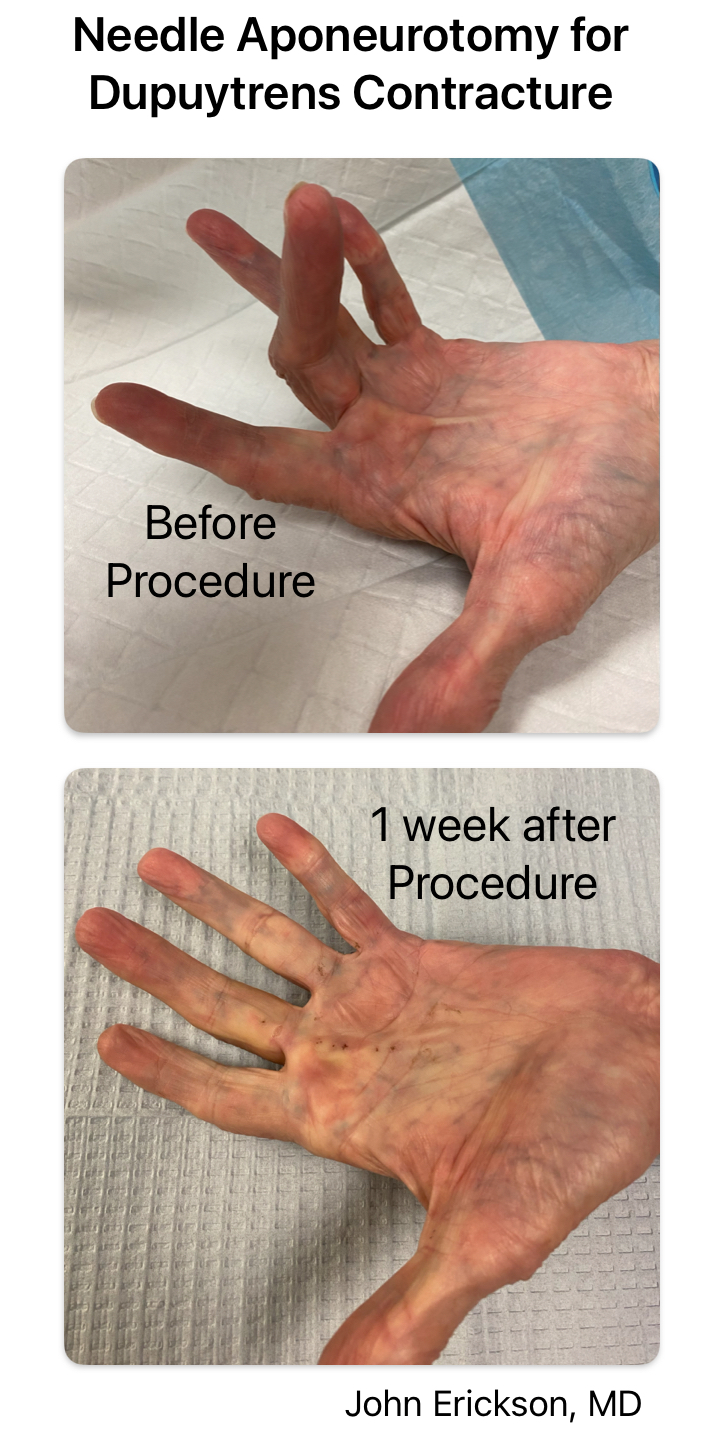
Needle Aponeurotomy (NA) is a minimally-invasive procedure performed under local anesthesia in the office. After injecting numbing medicine, the surgeon uses the tip of a needle to perforate the palpable cords multiple times. Then the fingers are manipulated to rupture the weakened cords, allowing the fingers to straighten in most cases. This procedure has some risks: skin tears, pain, bruising, and swelling at the needle site are common. These symptoms usually resolve in a few days. More severe complications such as infections, injuries to the nerves and flexor tendons are very rare. This is the least expensive treatment intervention for Dupuytren’s contracture and the procedure has minimal recovery time. Recurrence rates are high, but the procedure can be repeated in the future for recurrent contractures. This is a “high value” procedure: low cost and high quality.
Collagenase Injections
Another nonsurgical treatment for Dupuytrens contracture is a collagenase injection. Collagenase injections (Xiaflex) were FDA approved for use in the United States in 2010. This minimally-invasive procedure involves an injection of an enzyme to weaken the palpable Dupuytrens cords. The injection is performed in the clinic by the hand surgeon. 2-3 days later, the patient returns to the office for a manipulation procedure. This is performed with local anesthesia numbing medicine, and the surgeon gently straightens the fingers to rupture the weakened cords. Similar to NA, collagenase injections are not risk-free. Bruising, pain, and swelling of the hand and lymph nodes is common. Blisters and skin tears can also occur, but these usually heal on their own in a few days. Ruptures of the flexor tendons of the finger are rare (less than 1% of patients), but if this happens, it is a major complication. Allergic reactions to the medication are rare but also possible. Xiaflex collagenase medication is expensive, but it is often covered by many insurance plans. Recurrence rates are high, but the procedure can be repeated in the future for recurrent contractures.
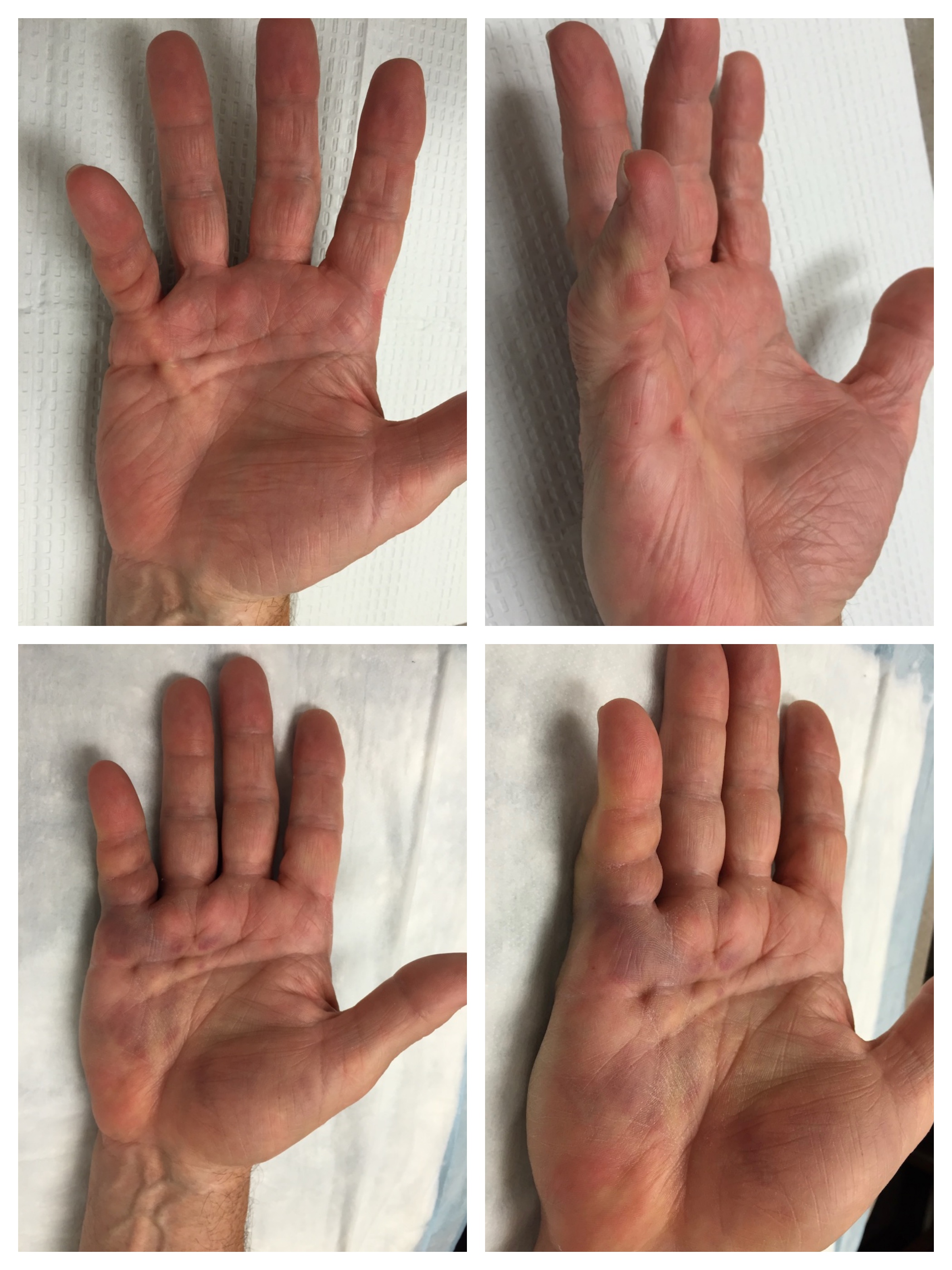
Consult with a hand surgeon to find out more about your particular Dupuytrens contracture case and learn about your treatment options including surgery and nonsurgical options.
Disclaimer: Please note, the material provided on this site is intended for general information only and does not constitute medical advice. This does not replace evaluation by a doctor. Please seek medical evaluation if you have a concern.
Updated March 2026